- Home
- Asian Recipes
- Chinese Sausage Fried Rice
Chinese Sausage Fried Rice
Turn A Traditional Recipe with Easy-To-Get Ingredients In Your Local Store To Make It Everyday Meal
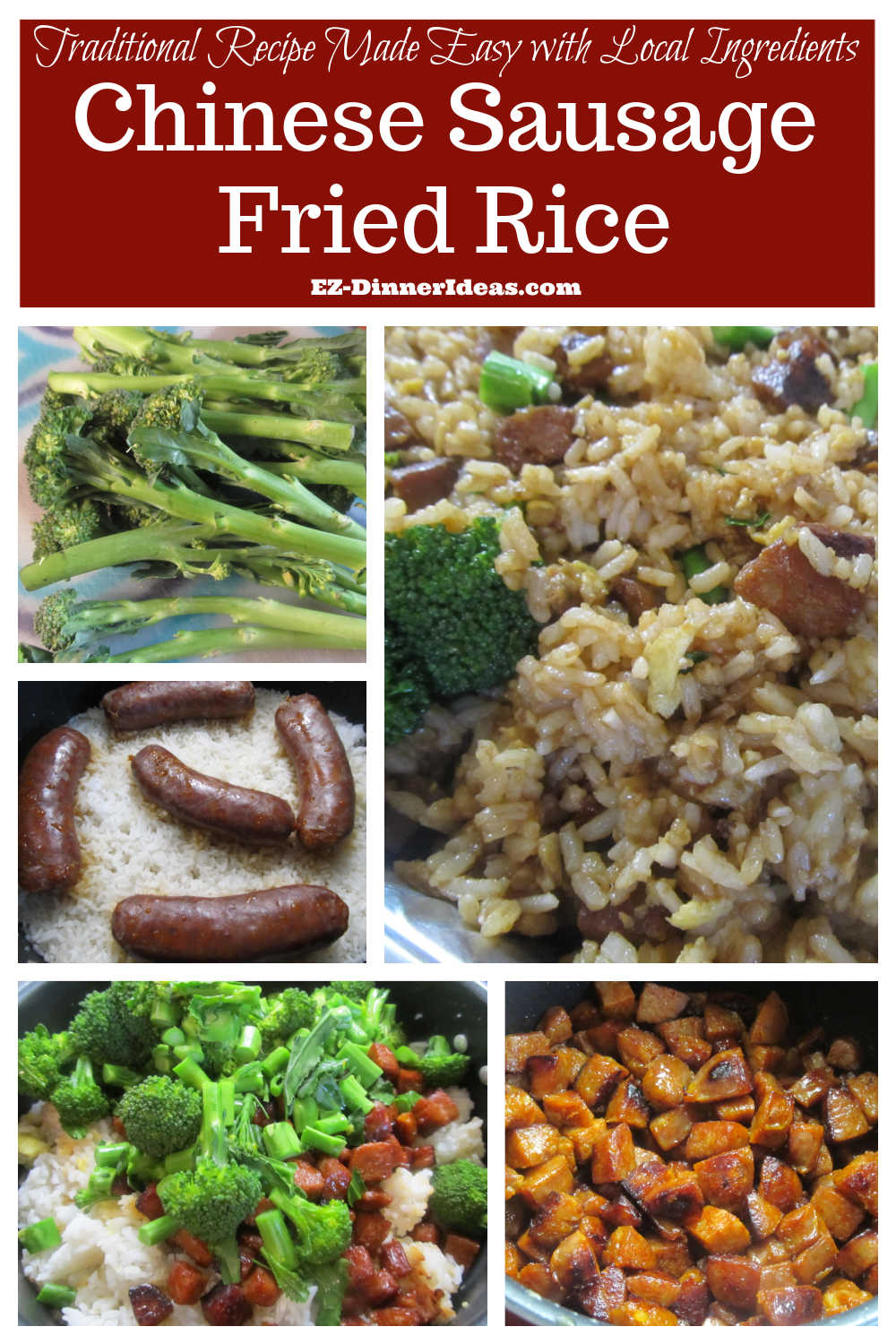
Chinese sausage fried rice is a traditional recipe. With a little bit of twist, you can get everything locally with a very low budget. For picky eaters at home, no more skepticism of traditional Chinese food. It's a win-win recipe for everyday meal.
Total Time: 55-60 Minutes
Prep Time: 15-20 Minutes
Active Cook Time: 40 Minutes
Serving: 6-8
I always enjoy pot-luck dinner because I can share my creations and get inspired by the others as well. This recipe was put together for one of those pot-luck dinner. We call it fellowship dinner at church. The reason why I chose to use alternative Chinese ingredients because plenty of American where I live are still very skeptical of some very traditional Chinese food. However, they are always interested. So, to keep them open-minded, I always go for some alternatives. Not to mention that I live 45-minute drive away from the closest Chinese store. As a result, doing so is a no-brainer.
Table of Contents
What is Broccoletti?
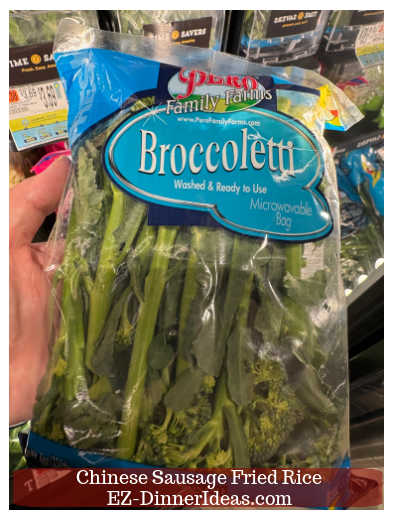 Broccoletti is usually in the product / salad section in the grocery store.
This may be a new word to many of you, including me. But you can tell from the first few alphabets that it is related to broccoli. I did search online to get more info about this kind of vegetables. The AI explanation was, ""Broccoletti" another name for broccolini (also known as baby broccoli or tenderstem broccoli), which is a hybrid cross between regular broccoli and Chinese broccoli (gai lan). It should not be confused with broccoli rabe (rapini)..." This definition is almost the same across the board if you look further into some recipe sites or Wikipedia. But there is one thing I totally disagree. In what ways? Let's explore it together.
We all know broccoli very well. I am a big fan of broccoli since I was a kid. The modern version of broccoli comparatively speaking is less maintenance. I still remember, during my childhood, you might see a dead worm in the middle of the bite of broccoli. Yes, it was disgusting. But with all the re-engineering in the farming industry, we don't see them as often as in the past.
Broccoli rabe (rapini) does look like regular broccoli. The stems are longer and more fibrous. But when you serve it, it has a bitter taste that broccoli and "broccoletti" do NOT have.
Chinese broccoli (gai lan) is a leafy vegetable. Its stem is as long as broccolini or sometimes longer. If you think broccoli rabe's stem is fibrous, "gai lan" is even more. The thickness of that stem is as thick as an index finger. When you cook it, the stem must be cooked first. Otherwise, all the leafy part is wilted and the stem is nowhere close to be cooked. "Gai lan" looks very similar to another popular Chinese vegetable called "choi sum". While this new Chinese vegetable was brought up, I want to emphasize its similarity of "broccoletti".
"Choi sum" also has long stem. But its stem is nowhere close to be fibrous as broccoli rabe (rapini) or Chinese broccoli (gai lan). It's tender which I found that its texture is closer to "Broccoletti". It does NOT look like broccoli or has the bitter taste like broccoli rabe (rapini).
So, in my opinion, "broccoletti" is more like a hybrid of broccoli and Chinese "choi sum" instead of the definition that you saw online.
Alternative of Broccoletti
Different grocery stores carry different products on their shelves. So, if broccoletti is not available, what could you use to replace it?
For those who live nearby a Chinese store, "choi sum", as above introduction, for sure is the best option.
But people, like me, live by the closest Chinese store about 40 minutes drive away, I highly recommend chopped frozen broccoli or freshly chopped kale which has very similar flavor as Chinese broccoli (gai lan).
The Difference between Chinese Brand Sausage and Real Chinese Sausage
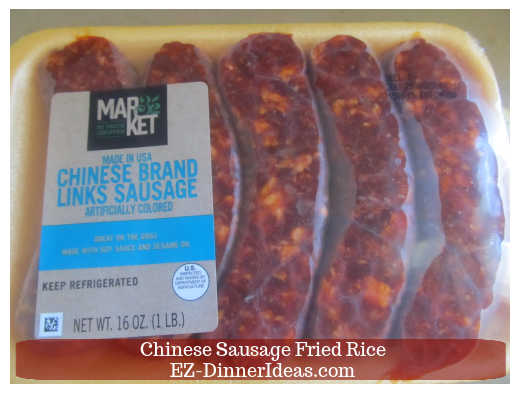 Chinese brand sausage
Chinese brand sausage, in fact, is more like a spin-off of regular American sausage links you see in the grocery store. It has the same shape as any regular sausage links. The biggest difference is that there are spices and other Chinese seasonings blended into the meat. So, it is dark red in color. Once it is cooked, you can smell some hoi sin sauce was in there. The flavor tastes very similar to the popular Chinese roast pork.
Real Chinese sausage is sun dried. As a result, it has a super long shelf life. We are talking about months, sometimes years, of shelf life. It appears to look very dry and waxy on the outside. In Chinese culture, Chinese sausage as gifts are always welcome by the recipients. There are different kinds of Chinese sausage. It is purely based on their ingredients. The Chinese brand sausage's, used in this recipe, flavor is closer to the light red traditional Chinese sausage.
There are several ways to incorporate real Chinese sausages into different dishes. The typical one was the inspiration of this recipe. When steamed white rice is almost cooked through, people would love to put in a couple Chinese sausages on top. This process will heat through the meat and let the juice sip through the rice. When dinner is served, the rice is super fragrance and the sausages are softened enough to slice into smaller pieces and serve along with the rest of the dishes on the dining table. This is one of the most popular ways of how Chinese serve this kind of sausages.
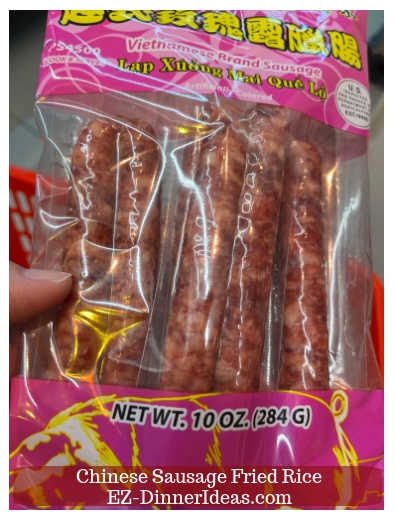 This is the real Chinese sausage that you can see the waxy appearance. This one also uses the ingredients taste very similar to the American Chinese brand sausages.
When we were kids, the fragrance would fill up the entire apartment we lived in. My sisters and I would beg our parents to give us the rice where the sausages were because that was the tastiest part in the entire pot of steamed rice.
(Side Note: While I was finalizing this recipe, I stumbled on a reel that the Chinese sausage was boiled in water. Then, they were cut up into dices to cook in fried rice. There are for sure plenty of ways to cook ingredients. It's your choice what method you decide to use. However, in my opinion, boiling this flavorful sausages in water means flushing all the flavors into the kitchen sink.)
Sometimes, these Chinese sausages will be cut up into dices when it is still in dry form and cook together with other ingredients, such as sticky rice. Sticky rice takes a lot longer to cook than brown and white rice. So, it is common to see Chinese sausages pairing with this ingredient to make rice dumpling. Some restaurants specialized in serving dim sum. They would wrap these sausages in "bao" bun and steam.
TIPS & TRICKS
Tips Making Best Fried Rice
I covered every aspect of making the best fried rice here. Just in case you are unaware of or forget about those winning tips, best to read this through before making this Chinese sausage fried rice dish.
Chinese Sausage Fried Rice Recipe and Instructions
Ingredients
16oz Chinese Brand Sausage
3 cups White Rice
3 3/4 cups Water
8oz Broccoletti (chopped into small bite size or chopped kale)
3 Eggs (beaten)
1 Splash Chinese Dark Soy Sauce
2 tbsp Extra Virgin Olive Oil
1 tbsp Hoisin Sauce (optional; add 2 tbsp water to dilute it)
Instructions
- The night before serving, combine 3 cups and 3 3/4 cups of water together to cook rice. (Follow the instructions of making perfectly steamed white rice.)
- After turning the heat down to low and cook for 5 minutes, the rice starts to settle down.
- Add Chinese brand sausages on top, cover and continue to cook rice until the 20 minutes is up. Turn off heat and leave it covered. The sausages will continue to cook while the rice starts to cool down.
- (If you plan on eating the white rice and sausages immediately, check to make sure the sausage is cooked through. It could possibly take another 10 minutes to get the sausages completely cooked. However, I highly recommend to be patient and wait for the next night to do so. Otherwise, try this method which needs quite a bit of workout of your muscles. Some may enjoy it as a great reason to do some exercises.)
- The night of serving, bring a pot of water to boil with salt. Add chopped broccoletti into the salted water and submerge every piece. Once the white part of the stems turn green, about 1-2 minutes, use a slotted spoon to take them out and put vegetables aside.
- Use the same pot and preheat it with 2 tbsp of extra virgin olive oil. Add beaten eggs. Keep stirring until eggs start to solidify, but still a bit wet. Transfer scrambled eggs to a bowl and put it aside.
- Cut cooked sausages into small dices. Use the same pot and crisp up the diced sausages at medium low heat. Stir regularly. (About 8-10 minutes) Transfer sausages to a plate and put aside. Leave the grease in the pot and stir in rice in medium low heat until it is warm and break up into grains instead of big clumps.
- Stir in eggs, sausages, broccoletti, soy sauce and hoisin sauce mixture (optional) until all is well combined. Serve Chinese sausage fried rice immediately and enjoy!
Chinese Sausage Fried Rice Steps with Photos
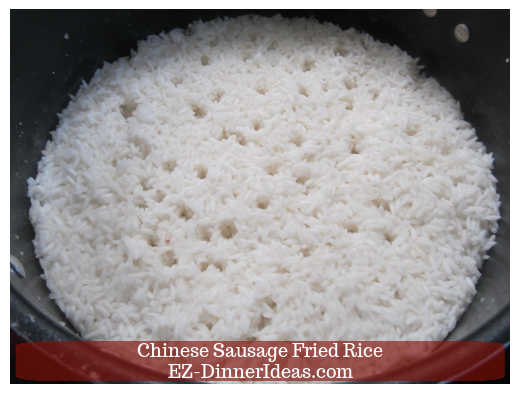 Steamed rice still has a long way to go before cooked through. But it's not watery that it is perfect for the Chinese brand sausages.
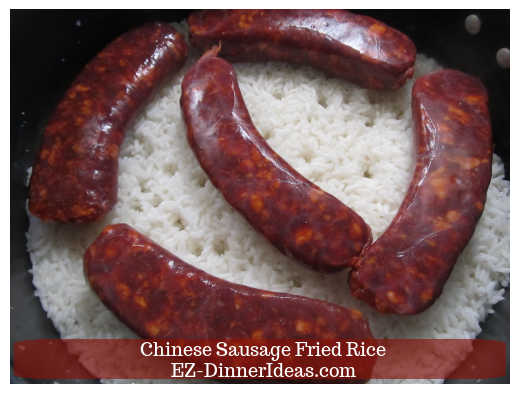 Adding Chinese brand sausages on top of rice and continue to cook both rice and sausages.
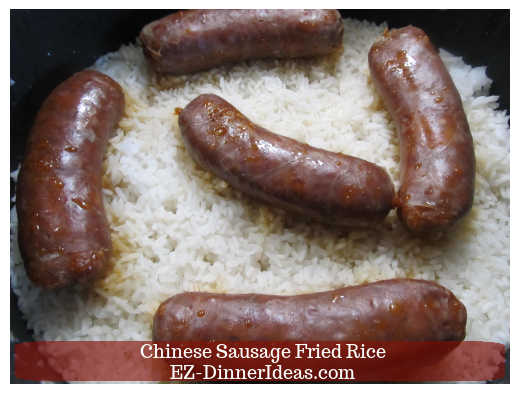 Both rice and sausages are cooked through. They need to sit overnight before making fried rice. (Wish you can smell it. It smells A.W.E.S.O.M.E.)
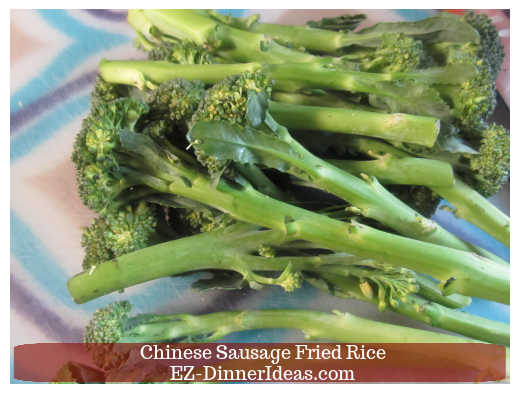 Line up broccoletti on the cutting board to chop up.
 Cut broccoletti into small bite size pieces.
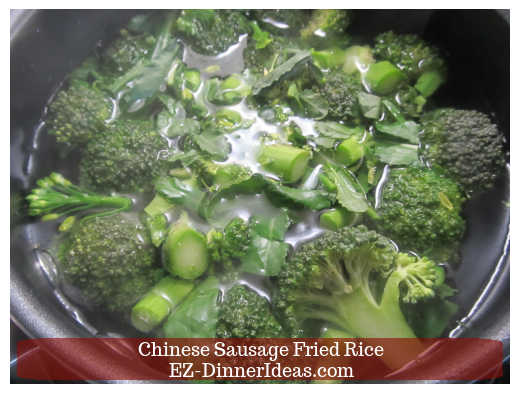 Quickly blanch broccoletti in hot boiling salt water.
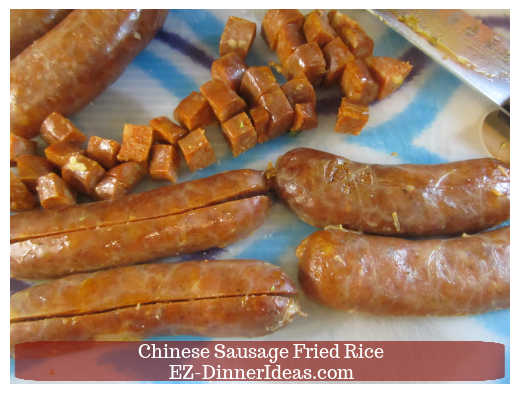 Cut Chinese brand sausages into dices (about the same size as the chopped broccoletti)
 Cook scrambled eggs, transfer to plate and put it aside for later.
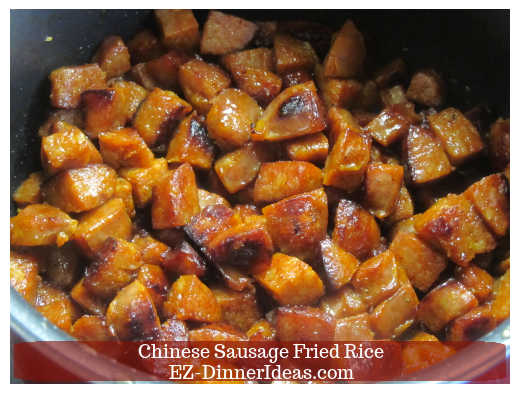 Use the same pot to brown diced sausages.
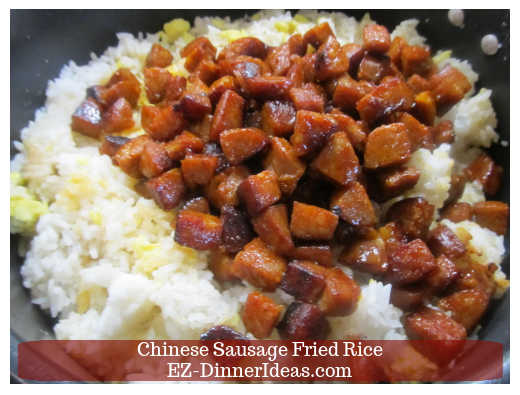 Cook fried rice. Then stir in scrambled eggs and browned sausages.
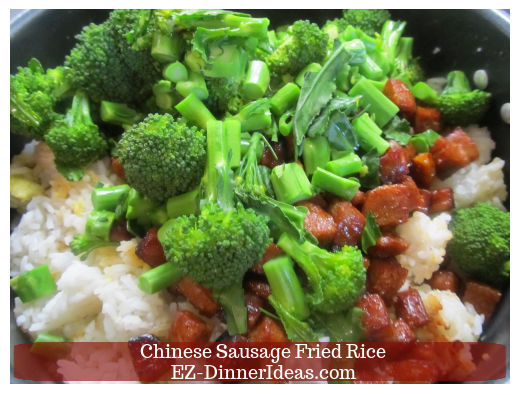 Stir in broccoletti into fried rice with Hoisin sauce (optional)
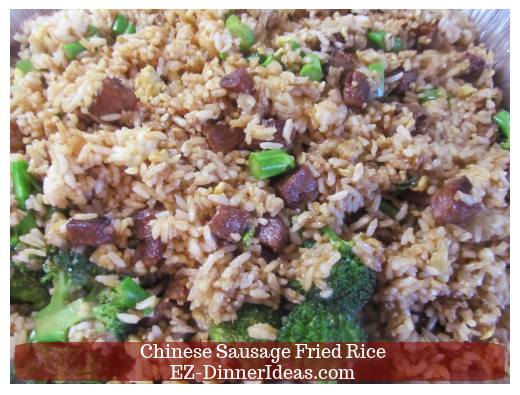 ENJOY Chinese sausage fried rice!!!
Slideshow
You May Also Be Interested In:
Download this FREE Ebook for Back to School
Once subscribed, you will be requested to confirm your email address one more time. Then, you will have a direct link to download all FREE e-books and exclusive recipes.

Subscribe to Our Newsletter Below

Recent Articles


-
Serve Restaurant Quality Prime Rib at Home This Christmas
Oct 25, 26 07:00 AM
This is a secret recipe from my uncle. He had never told me how to do it. I happened to see him make it from start to finish. That's how I learned the entire recipe. This recipe is a guarantee that yo… -
What Side Dishes Going Along with the Ham Dinner?
Oct 24, 26 07:00 AM
You can't only serve ham for Christmas. There may be plenty of side dishes that you are considering. But it can be overwhelming. If you have a plan together with what kind of cook wares to use and the… -
Very Special Christmas Ham Dinner
Oct 23, 26 07:00 AM
Ham dinner is all about the gravy. I learned this from my late mother-in-law. Instead of using pineapple juice, we use fruit cocktail juice for the gravy. Once you have the first taste, you will never…

Home > Asian Recipes > Chinese Sausage Fried Rice | A Traditional Recipe Made Easy